Watt Poultry® International published an article earlier this year on Amlan international’s product, Phylox®. Phylox is a natural alternative to anticoccidial drugs that works well alone, as part of a rotation program, or as part of a bio-shuttle program to control coccidiosis. The natural ingredients of phylox targets multiple Eimeria species with several modes of action, while also promoting a healthy intestinal barrier and improving intestinal immunity. If you missed this article, here is your chance to learn more about Phylox. Follow the link to learn more.
WATT Poultry® International recently featured Dr. Wade Robey and Dr. Aldo Rossi in an article showcasing the versatility and effectiveness of phytochemicals in the modern poultry market. Phytochemicals have emerged as a natural alternative for coccidiosis control in poultry, providing natural protection to your flock. Dr. Aldo Rossi highlights the adaptability of phytochemicals, explaining how they offer a cost-effective solution in the poultry industry’s progression toward no antibiotic ever (NAE) systems. Click to read more
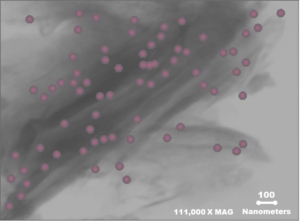
(Figure 1) Platinum octaethylporphyrinmolecules seen adsorbed by Calibrin-Z using Cryogenic Transmission Electron Microscopy. Platinum (pink) seen under microscopy indicates where the organic compound was bound in the interconnected pores of the unique clay mineral.
Providing Economic Value for More Than a Decade
For more than 16 years, Calibrin®-Z (available in select international markets) has helped poultry producers mitigate the damage that mycotoxins cause to their livestock, their sustainability, and their bottom line. Calibrin-Z’s ability to bind mycotoxins, fungal toxins that negatively affect the health and performance of livestock, has been shown both in experimental settings and on the farm. The implication from this research was that the unique clay mineral that comprises Calibrin-Z was blocking the negative effects of mycotoxins on animal performance by adsorbing the toxins in the pores of the clay. The way the binding occurred was known but had not been seen directly.
Until Now!
Scientists from Oil-Dri worked with university scientists to enable us to see organic molecules binding to Calibrin-Z (Figure 1). To do this they used Cryogenic Transmission Electron Microscopy. This type of microscopy is used to look at biological and materials structures at an almost atomic level. The material of interest is flash-frozen to keep from damaging the structure of the organic material that is being observed.
Octaethylporphyrin, is an organic molecule that was chosen to represent the mycotoxins that Calibrin-Z normally adsorbs. It has a general size and planar orientation similar to that of mycotoxins. Platinum is not an element that is typically found in the clay mineral that makes up Calibrin-Z and can be seen using cryogenic transmission electron microscopy. This combination of factors makes it an excellent marker to use to visualize Calibrin-Z’s binding sites. When the organic portion of the platinum octaethylporphyrin molecule is adsorbed onto the Calibrin-Z binding sites you can see the platinum with a cryogenic transmission electron microscope. The platinum in the picture taken under the microscope was interspersed between the layers and on the outer surface of the Calibrin-Z particles. This shows that the organic compound was bound in the interconnected pores as was anticipated.
Selection and Quality
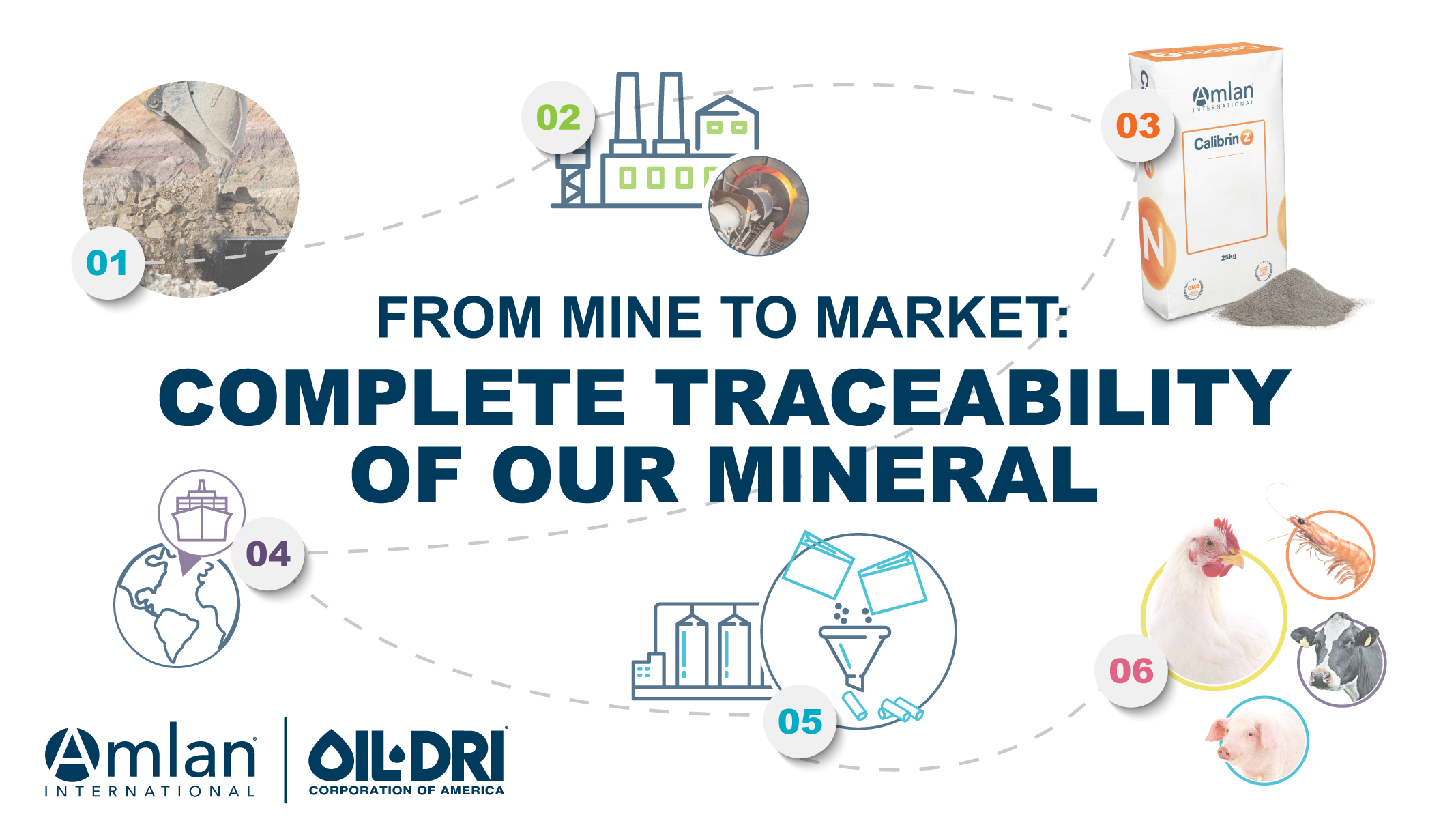
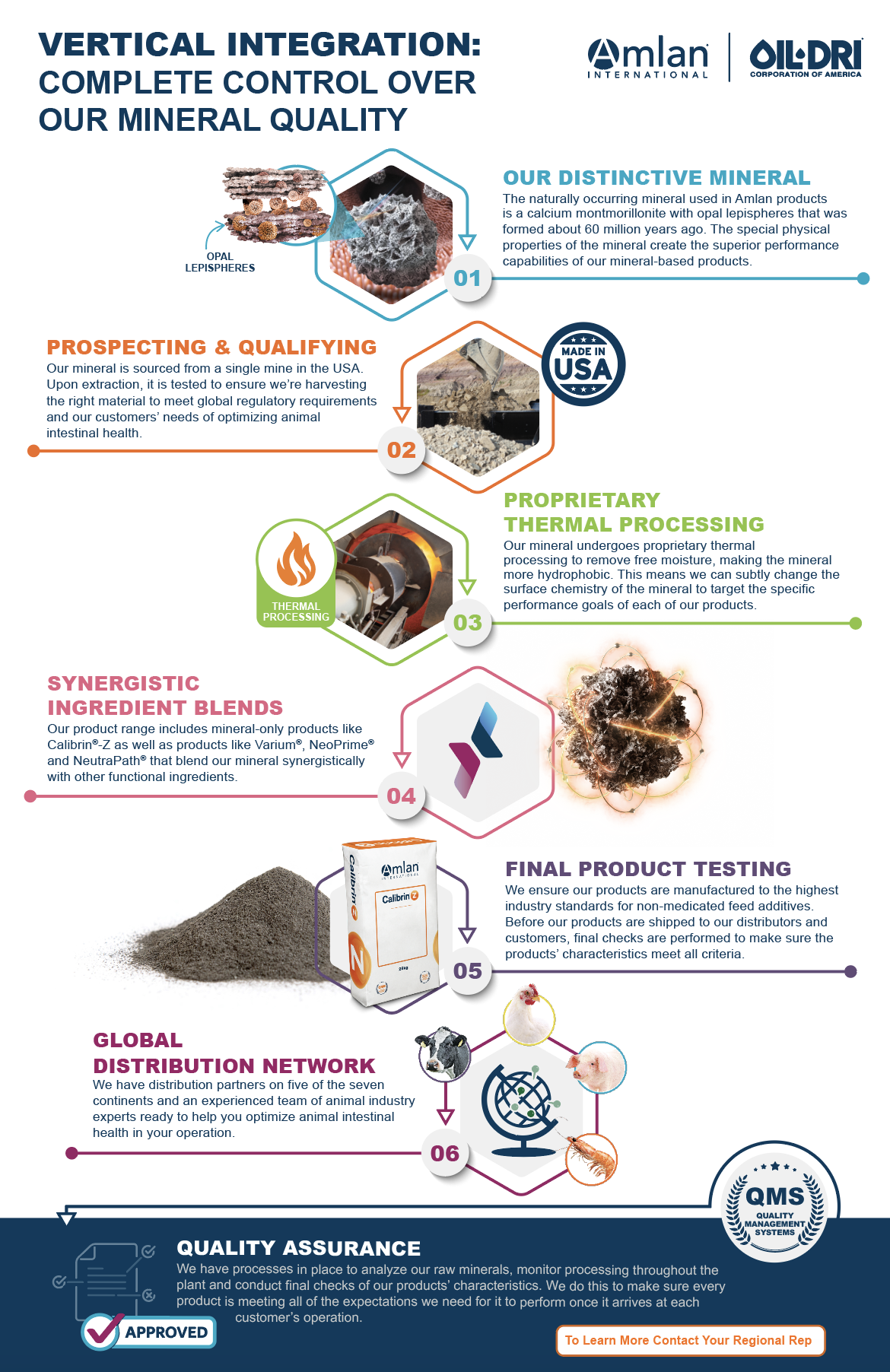
Calibrin-Z’s natural ability to adsorb biotoxins is based on the clay mineral used in its manufacture. The source of the clay mineral was chosen after years of testing and comparisons of a multitude of different potential sites. This source was selected based off its innate ability to bind toxins, the ability to improve that binding with processing, and its benign chemical profile. With vertical integration, mine to market traceability, and decades of reserves, this unique clay mineral is the foundation of Amlan International’s animal health products.
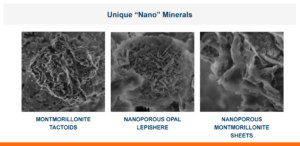
Calibrin-Z is composed mainly of calcium montmorillonite with opal lepispheres. The opal lepispheres are intimately interwoven within the nano-scale layers of montmorillonite. They help Calibrin-Z maintain its structure during a proprietary processing step that expands the number of biotoxins Calibrin-Z adsorbs. The unique structure of Calibrin-Z is vital to its toxin binding capacity.
Absorption and Adsorption
A kilogram of Calibrin -Z has approximately the same surface area as 60 soccer fields. This is because over 99% of Calibrin-Z’s total surface area is inside the particle. Calibrin-Z’s internal network of interconnected channels and pores is ~50% of its total volume. When Calibrin-Z is fed to livestock or poultry, fluid in the intestine rapidly absorbs into the mineral’s pores through capillary action. Biotoxins in the fluid move inside via the networks of capillary channels. From a molecular perspective it is as if they are traveling on a superhighway. Biotoxins adsorb once they reach the binding sites on the pores’ surfaces.
The biotoxin molecules are attracted onto the pore surfaces via adsorption, this is both chemisorption and physisorption. Biotoxins will structurally coordinate themselves onto charged surfaces and bind via ion-dipole and electrostatic interactions. While mycotoxins tend to be smaller and can enter the pores of Calibrin-Z and bind there, bacterial toxins tend to be larger but may also bind. Theoretically, there are special physical properties that allow the molecular conformation of the bacterial toxin to become distorted, which allows them to adsorb onto macro-surfaces within the pore spaces.Someday we may be able to use microscopy to see that, too.
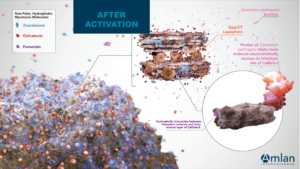
Because of its structure, the clay mineral that Calibrin-Z is made from is naturally hydrophilic and will bind to polar molecules. But Calibrin-Z undergoes a proprietary processing method that causes dehydroxylation of the clay mineral’s crystal structure. During this process the opal lepispheres spread between the layers maintain its channels and binding sites. Thus, Calibrin-Z continues to bind polar molecules, such as the mycotoxin aflatoxin, but processing also allows it to have the ability to bind non-polar mycotoxins such as zearalenone. The ability to mitigate the effects of multiple mycotoxins has been shown using both in vitro and in vivo research.
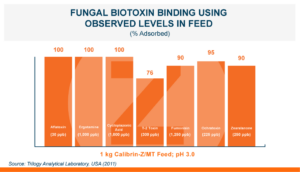
Because of Calibrin-Z’s proprietary heat treatment the toxins that it adorbs include a broad-spectrum of polar and non-polar toxins. Therefore, Calibrin-Z has shown high adsorption properties for mycotoxins, enterotoxins, and endotoxins.
Examples of Biotoxins Bound by Calibrin-Z
Natural and Reliable to Use
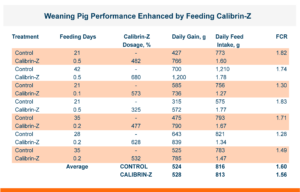
Calibrin-Z is shown to be a reliable and effective biotoxin binder. When added to animal feed at up to 5X the recommended dose it showed no negative effects. In fact, there was often a numerical improvement in gain, feed intake, or feed conversion when Calibrin-Z was added to an unchallenged diet. This indicates that there was no significant negative effect of Calibrin products on nutrient utilization.
The unique surface chemistry and structural properties of the calcium montmorillonite in Calibrin-Z, added to its proprietary thermal-processing method, are what provide its optimal toxin binding capacity. This is what sets Calibrin-Z apart from other clay-based products. We have long known this because of its structure, how it works in vitro and how for more than a decade it has improved the performance of livestock and poultry. And now we, and you, are able to see it with our own eyes.
To learn more about broad spectrum biotoxin binder Calibrin-Z, and how you can add it to your poultry and livestock feed, visit amlan.com
During the 2023 World Dairy Expo held in Madison, Wisconsin, Ann Hess from Feedstuffs 365 spoke with Amlan, the Animal Health business of Oil-Dri, about mineral technology as a solution to support gut health and improve diary performance. Listen to Dr. Marc Herpfer, VP of New Technologies, Regan Culbertson, VP of Strategic Marketing, and Jay Hughes, Director of Technical Services, Americas discuss how the unique, thermally processed calcium montmorillonite with opal lepispheres are driving economic, bottomline, performance in the dairy industry.
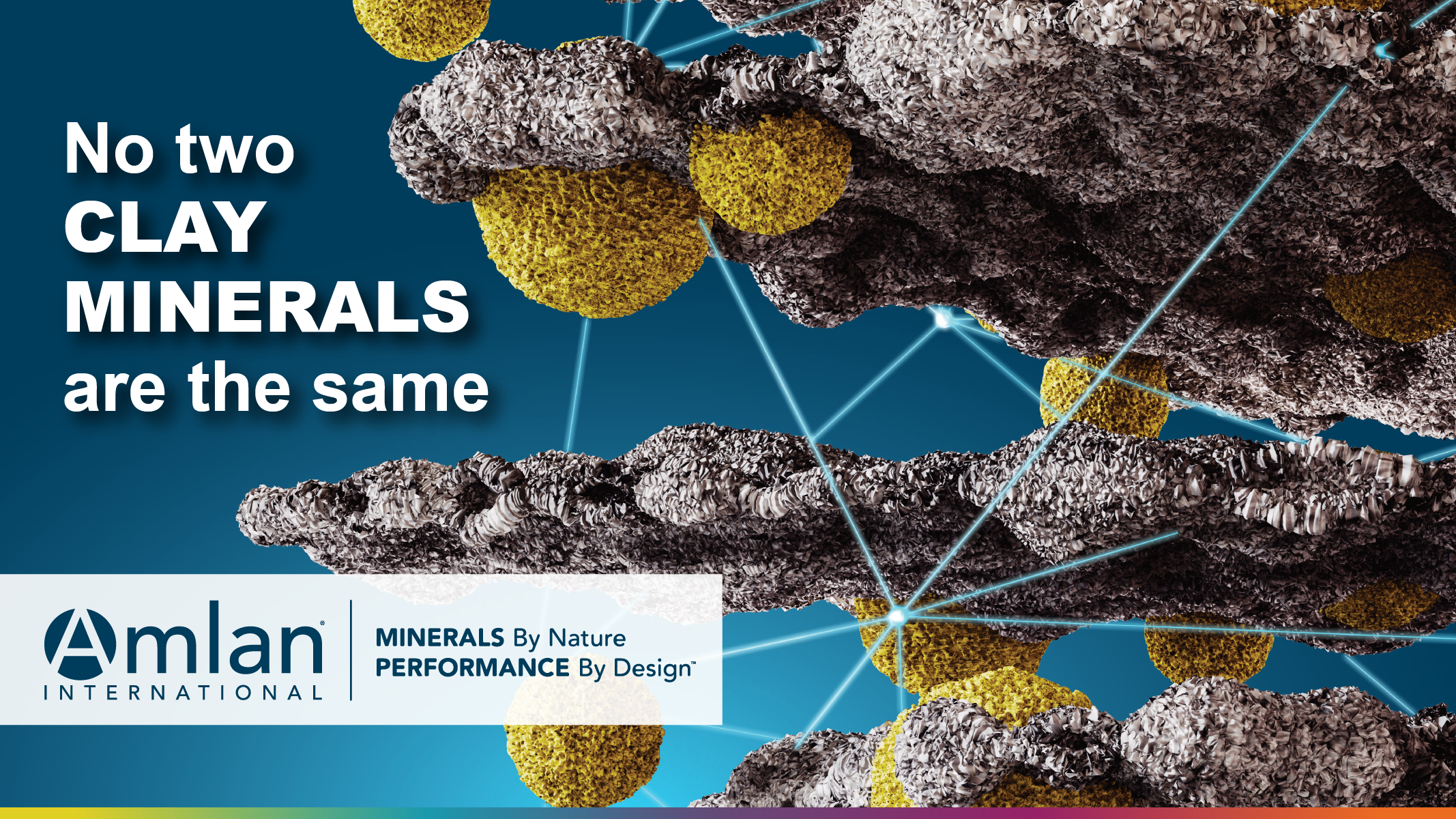
For decades, clays have been used globally as feed additives to help with feed flowability and pellet binding (e.g., Flo-Fre™ and Pel-Unite™). More recently, some international markets have also recognized the ability of mineral-based products to bind biotoxins in the intestinal tract of animals. However, there is a misconception in the industry that all clay minerals are the same and have the same biotoxin-binding abilities. The truth is that the natural properties of the minerals and how they’re processed have a significant impact on their effectiveness as a biotoxin enterosorbent.
Calibrin®-Z (available in select international markets) is an example of a mineral-based product that’s not your typical biotoxin-binding feed additive. Many mineral-based products focus on binding only one biotoxin (e.g., aflatoxin). However, the natural composition of Calibrin-Z and the proprietary processing technique that’s used to modify its surface chemistry allow it to bind a broad spectrum of biotoxins, including bacterial exotoxins and endotoxins and polar and nonpolar mycotoxins.
A Natural, Synergistic Mineral Mix
Calibrin-Z is a calcium bentonite that is primarily composed of two minerals — calcium montmorillonite and opal (amorphous silica lepispheres). Each of these minerals has specific physical properties and it’s how they’re naturally mixed together that gives Calibrin-Z part of its distinctive enterosorbent abilities (Figure 1).
Figure 1: A representation of the calcium montmorillonite layers intertwined with opal lepispheres.
The interwoven, naturally occurring calcium montmorillonite and opal lepispheres of Calibrin-Z create more biotoxin-binding opportunities than if they were used alone. It’s what makes the intimately mixed mineralogic nature of Calibrin-Z difficult to duplicate — the minerals grew and altered their properties for over 60 million years.
An Interconnected Pore Network
Calibrin-Z is very porous — it’s about 50 percent pore space consisting of nano, micro, meso and macro pore sizes. Opal lepispheres have their own micro pores and help to open up spaces within the calcium montmorillonite structure because they’re naturally formed amongst the calcium montmorillonite. This natural mixture of minerals gives Calibrin-Z a very low bulk density, high porosity and an extensive surface area of around 450,000 m2/kg — an area equivalent to around 50 average-sized soccer stadiums. A phenomenal amount of chemistry can occur on this expansive surface area.
In order for Calibrin-Z to adsorb biotoxins that are in intestinal fluid, the fluid must first be absorbed into its pores. The pores of Calibrin-Z are an interconnected network that allows intestinal fluid to enter them, where the biotoxins can then interact or bind with the pore surface. Unlike other clays, the porosity of Calibrin-Z creates an open construct on a microscopic scale and a more inviting place for intestinal fluids to be absorbed into.
A Hydrophobic Surface Improves Biotoxin Binding
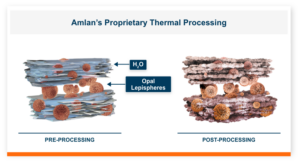
When the calcium bentonite in Calibrin-Z is mined, the capillaries and channels of its pores are naturally filled with water. Our proprietary thermal processing technique removes most of this water and also modifies the surface of the minerals to allow the pore surfaces to become more hydrophobic (Figure 2). This is a significant point of difference for Calibrin-Z because certain biotoxins (e.g., nonpolar mycotoxins and bacterial toxins) have a greater affinity for hydrophobic surfaces than hydrophilic surfaces. Other mineral-based products that are more hydrophilic than hydrophobic won’t be able to adsorb the broad spectrum of bacterial and fungal toxins that Calibrin-Z can bind.
Figure 2: Thermal processing removes water and changes the surface chemistry to create biotoxin-binding Calibrin-Z.
Safe, Irreversible Thermal Processing
Our proprietary thermal processing heats the surface of Calibrin-Z, changing its surface chemistry. These thermochemical changes are irreversible — they can’t be undone even after being exposed to the harsh environment of the animal’s gut.
Some companies activate the surface of their minerals with harsh chemicals instead of heat. Chemical activation of minerals does not create an irreversible bond, so theoretically these chemicals could be stripped off in the animal’s gut. This is important because the in vitro biotoxin-binding efficacy of a mineral-based product activated with chemicals may not be replicated in the real world. In the animal’s gut, the minerals are exposed to strong acids, enzymes and other substances that can change their properties and biotoxin enterosorbent abilities. Thermal processing is a safer, ecofriendly alternative to chemical activation of minerals that is permanent.
Vertical Integration Ensures Consistency
Quality and reliability of supply is another differentiator for Calibrin-Z. Amlan is the animal health business of Oil-Dri® Corporation of America, a leading global manufacturer and marketer of sorbent minerals. Vertical integration allows Oil-Dri and Amlan to control every step of the mineral production process to reliably deliver safe, high-quality and efficacious mineral-based products.
If needed, we can trace the minerals in our products from the feed bag, through the supply chain, through the processing chain in our plants back to where we mined the calcium bentonite. This includes the original core drill hole that was used to extract and pre-qualify the raw material to ensure it met the physical and absorptive quality profile. We mine our calcium bentonite from a single mine and from a specific location within our mine that has hundreds of years of reserves — giving our customers confidence in the availability, consistency, quality and efficacy of our minerals every time they buy a new batch of products.
The biotoxin-binding abilities of Calibrin-Z are quite different compared to most other calcium bentonite-based biotoxin binders. That’s why it’s important to look beyond the ingredient list on the feed bag and review the in vivo research that proves a feed additive can improve the intestinal health and performance of production animals. To read our in vivo Calibrin-Z research, visit our Research page or contact your local Amlan sales representative.
Our mine to market approach offers a distinct advantage for our customers who value ingredient consistency and traceability. Because we’re vertically integrated, we oversee the entire production process. We extract the mineral, thermally process it, create and package multiple mineral-based products and distribute them all over the world. That’s the Amlan difference.
To learn more about the unique properties of our mineral and why all clay minerals aren’t the same, visit our mineral technology page. For more information on the traceability and reliability of our mineral, contact your local Amlan representative.
As more poultry producers incorporate antibiotic-free (ABF) practices into their operations, the need for innovative disease mitigation technologies has also increased. Amlan International is meeting this demand by developing next-generation products, using mineral-based technology, that optimize bird intestinal health and add value for the producer.
In this post we examine four technological advances that could help drive progress in managing disease, bacteria and toxins in flocks while meeting consumer demands for high-quality animal protein. We discuss the advanced mineral technology that is the foundation of Amlan’s natural feed additives as well as a unique diagnostic service offered by Amlan. We also highlight technology on the market from other (unaffiliated) companies that our team thought might be useful for ABF producers to consider when looking for new ways to manage disease in their flock.
Optimize intestinal health with advanced mineral technology
In a crowded feed additive market, advanced mineral technology is the Amlan difference. As the animal health business of Oil-Dri® Corporation of America, Amlan’s scientifically proven products are backed by
Oil-Dri’s 80 years of experience in mineral science. The single-source raw material that is the core of Amlan’s products is calcium montmorillonite with high-capacity opal-CT lepispheres. Proprietary thermal processing — that does not use harmful chemicals — is tailored for each product to create unique functionalities.
Calibrin®-Z (available in select international markets) is a broad-spectrum biotoxin binder that protects poultry and livestock from biotoxins that reduce performance and cause morbidity or mortality. All-natural Calibrin-Z binds polar (e.g., aflatoxin) and nonpolar (e.g., zearalenone) mycotoxins, as well as bacterial toxins like those produced by C. perfringens, E. coli and C. difficile. Binding these biotoxins enhances intestinal health to improve feed efficiency and overall animal performance.
Minimize production loss with timely mycotoxin diagnostic results
When determining whether feed is contaminated with mycotoxins, a fast and accurate analysis is critical for preventing the negative health and production effects mycotoxins can cause. Amlan has partnered with Envirologix, the world’s most trusted name for quantitative testing kits at the point of grain delivery, to bring producers . This program provides on-site quantitative mycotoxin detection results within 10 minutes. The test identifies mycotoxin contamination levels in the feed, and Amlan’s dose calculator can be used to determine the optimal dose of to apply in the animal’s ration to mitigate the toxin threat.
Automation technology increases animal welfare and detects disease
Robot automation in poultry barns is a growing segment of the poultry industry. Robotic technology uses sensors and 2D and 3D cameras to perform repetitive and time-consuming tasks such as disinfecting barns, picking up floor eggs, vaccinating and managing litter.
Increasingly important in modern poultry operations, robotics can also help mitigate production risks and ensure animal welfare goals are met. Thermal imaging can be used to detect animal body temperatures, early disease indicators, record bird activity/welfare and report mortalities while performing their assigned tasks. Monitoring technology can also help producers observe environmental metrics in facilities such as temperature, humidity and carbon dioxide and ammonia levels. A recent development in this area is using sensors to determine when a poultry house smell is no longer “normal.” This technology could help identify a biosecurity or disease risk to a flock.
Modern consumers are increasingly demanding to know more about how and where their food is raised. Blockchain technology, often in combination with other digital tech, helps track and trace animals and food products throughout the supply chain by linking small packages of data to provide a digital audit of meat production and food safety. At the farm level, these data points could include point of origin, veterinary and feed source records and transportation dates.
As poultry move through the food production system, blockchain technology records significant data points to ensure food supplies meet the traceability requirements that consumers demand. In the processing sector, for example, blockchain can link production information with the final product’s labeling and packaging information to ensure compliance with brand commitments. Blockchain offers incredible promise for connecting poultry growers with new market opportunities.
These emerging trends are important to monitor so producers can determine how best their operations can evolve and remain competitive. Investing in the right technologies will be the key to moving poultry producers to greater production, improved efficiencies, enhanced market opportunities and increased profitability. At Amlan, we are developing and bringing to market advanced feed additive technologies that optimize the intestinal health and production efficiency of producers’ flocks while preserving the economic viability of poultry production. To learn more, click .
Enteric disease costs the poultry industry billions of dollars each year and has become a greater challenge to control due to the reduction in the use of antibiotic growth promoters. However, research has shown that feeding the mineral-based feed additive Varium® (available in select international markets) throughout a broiler’s lifetime can help them naturally defend against the production-limiting effects of pathogens and improve overall bird performance, leading to greater profitability for producers.
Lifetime Benefits of Varium®
Keeping the intestinal environment of birds healthy, thereby allowing effective nutrient absorption and defense against pathogens and their toxins, is an important component of profitable antibiotic-free production. Amlan has developed a range of natural mineral-based products, like Varium, that are designed to support a healthy intestinal environment and add value for poultry producers.
Varium is a synergistic formulation of our proprietary mineral technology, whole yeast and a functional amino acid that promotes efficiency and productivity in poultry. Feeding Varium throughout the lifetime of the bird can help reduce pathogenic challenges, strengthen the intestinal barrier and safely stimulate the intestinal immune system to naturally defend against disease.
Long-Term Studies Demonstrate Varium Benefits
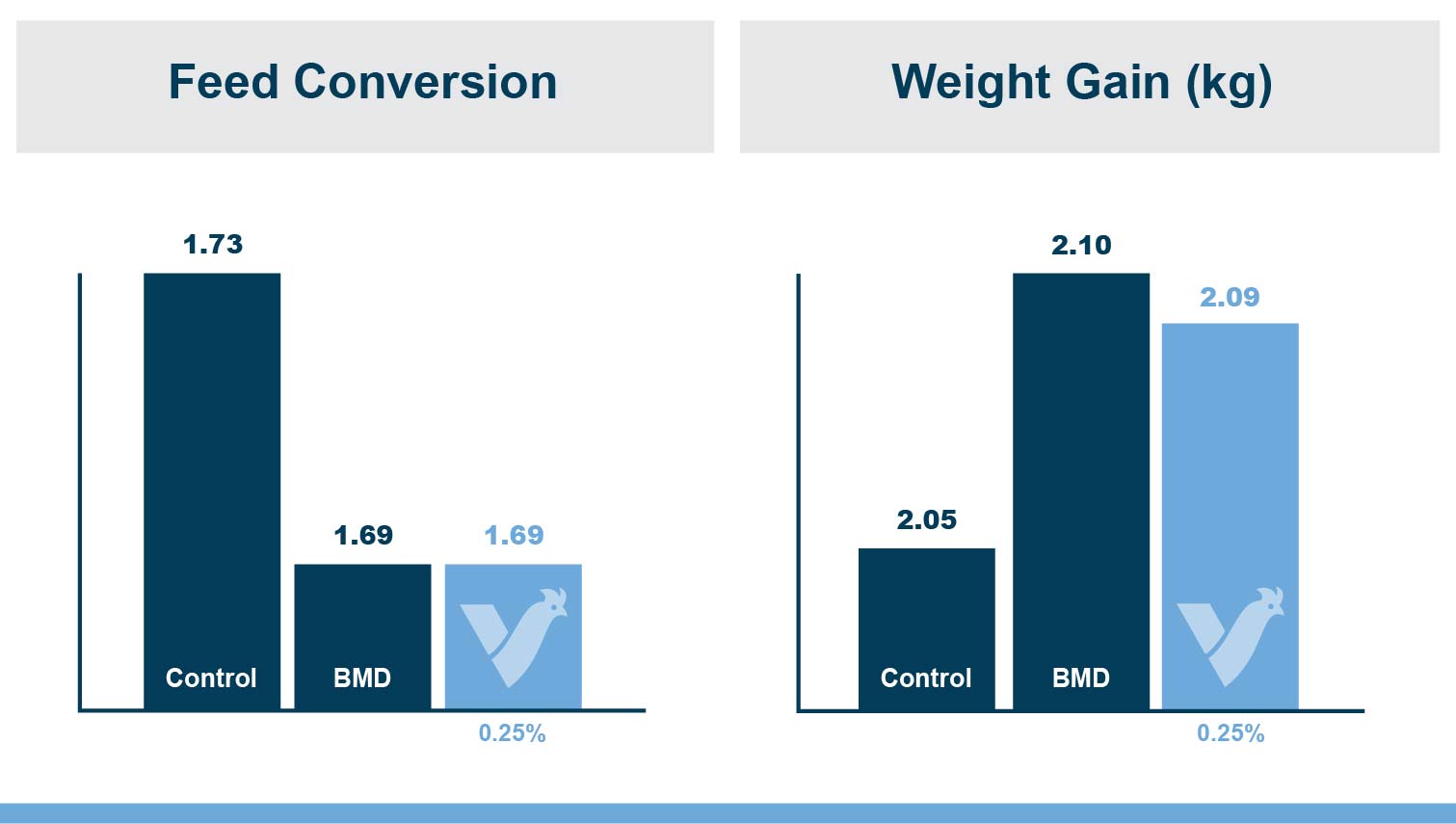
The ability of Varium to improve production performance was demonstrated in two studies. In a 42-day broiler study, birds were fed either a standard diet (control), a diet supplemented with the antibiotic bacitracin methylene disalicylate (BMD; 55 g bacitracin/MT of feed), or a diet supplemented with Varium (0.25%). All birds were given typical vaccinations on day of hatch.
Varium showed similar performance advantages to BMD over the control group. Feed conversion was 1.69 for both the Varium and BMD groups and 1.73 for the control group (Figure 1). Similarly, weight gain was greater for the BMD and Varium groups compared to the control (Figure 1).
Figure 1: Broilers fed Varium or BMD had similar feed conversion ratio and weight gain (kg) and were better than the control in a 42-day study.
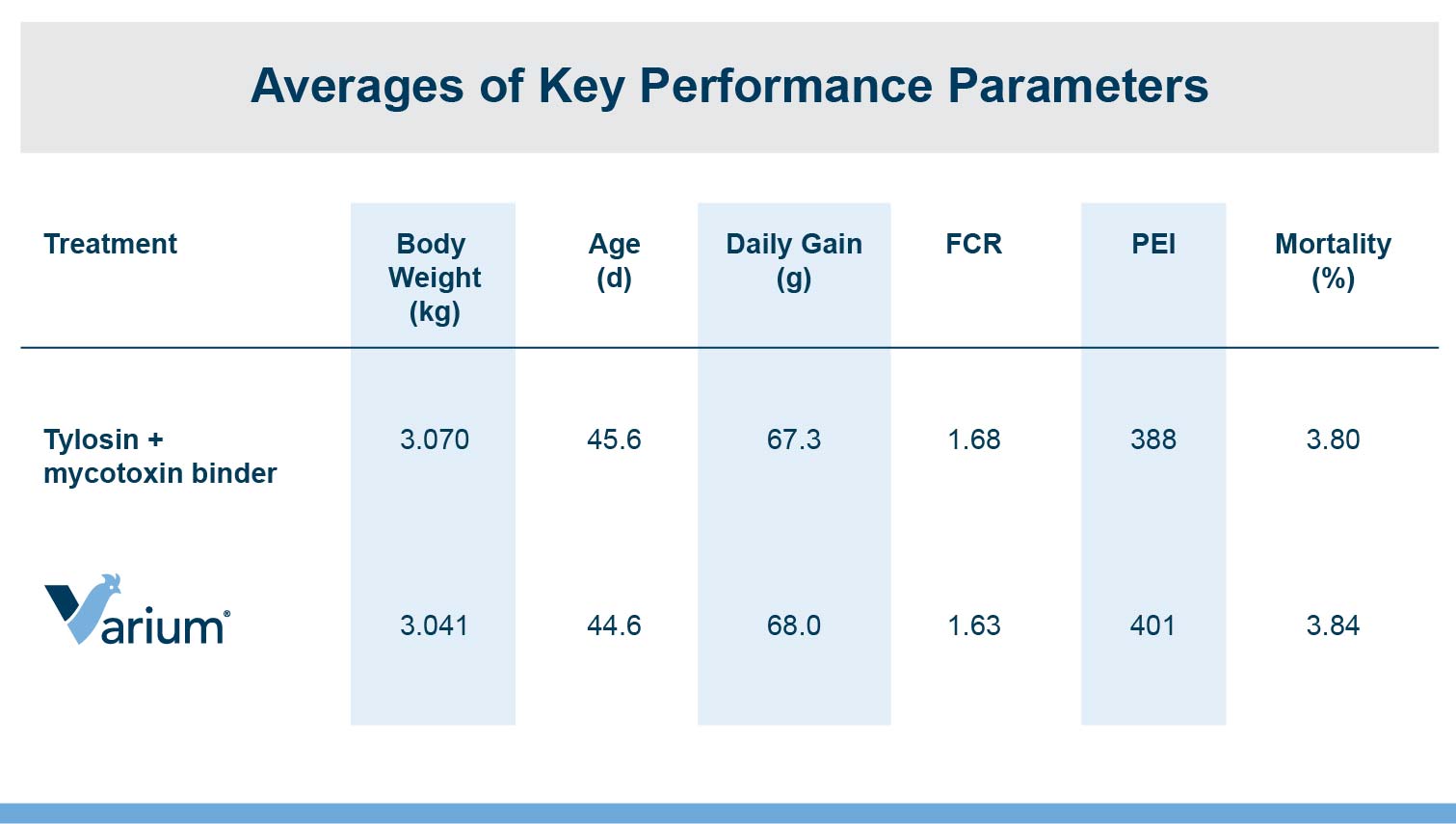
In another study, Varium was compared to tylosin in a commercial broiler grow-out operation in Brazil that processes approximately 170,000 birds per day. Tylosin (55 ppm) and an enzyme-based mycotoxin deactivator were added to the diet for 12 months then removed from the diet and Varium (0.1%) added for the following 12 months. No significant differences were observed between the tylosin plus mycotoxin binder and Varium for average body weight, average age at processing, average daily gain, feed conversion rate (FCR), performance efficiency index (PEI) or mortality (Figure 2).
Figure 2: Varium performed similar to tylosin plus a mycotoxin binder in a commercial poultry operation over a 12-month period.
Varium Provides Producers a Return on Their Investment
These long-term studies demonstrate the benefit of daily Varium supplementation to support the health and performance of broilers. However, with feed being approximately 70% of production costs, it is also important to ensure that feed additives are economically viable. Therefore, the cost advantage of lifetime Varium supplementation was calculated.
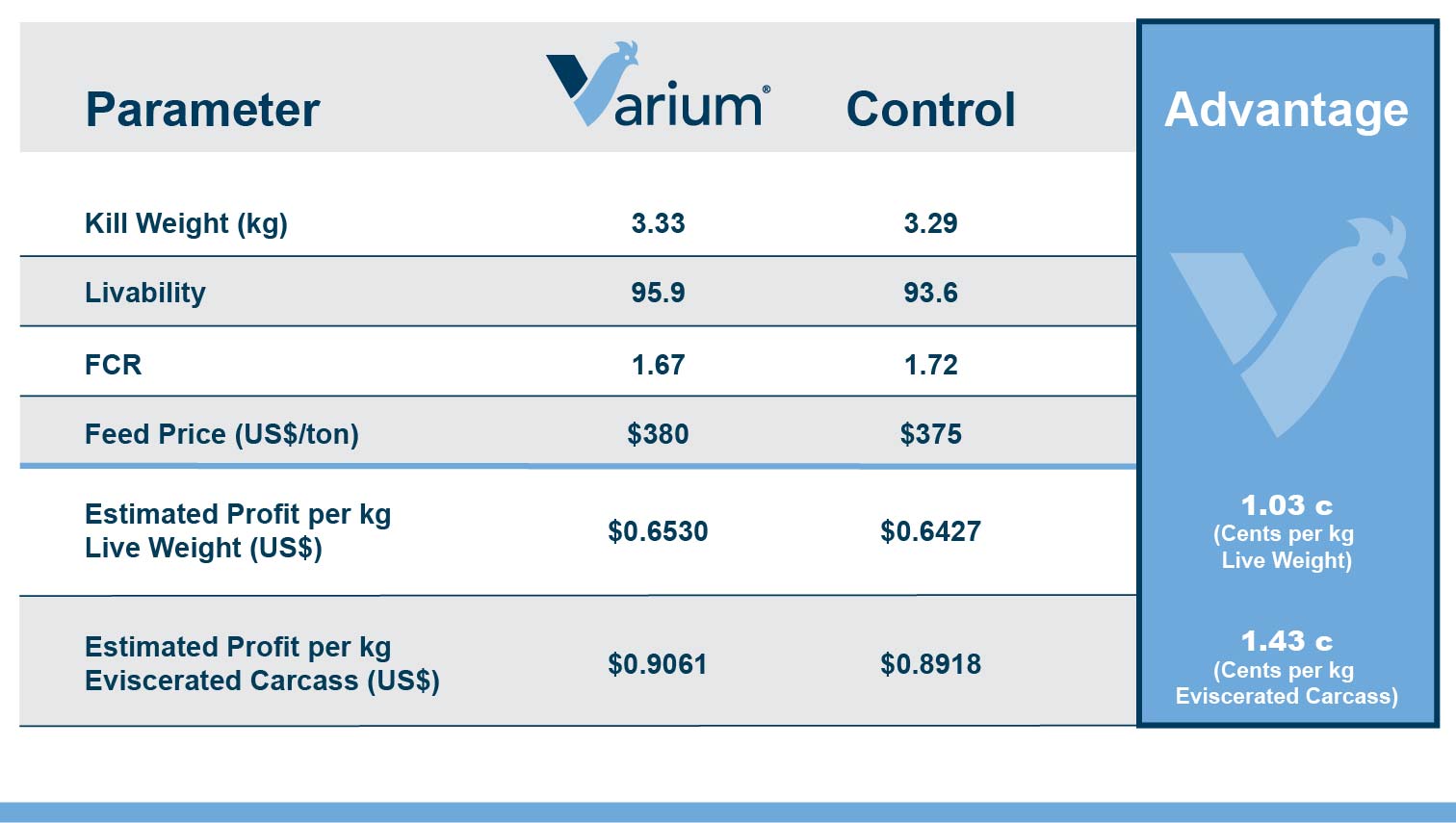
A broiler economic evaluation model was developed based on a trial conducted by a broiler producer in Brazil. One group of birds (control) were fed an antibiotic growth promoter (AGP) and a non-Amlan mycotoxin binder and another group were fed Varium (the AGP and mycotoxin binder were replaced by Varium in the diet). The study was conducted at three farms with 30,000 control and 30,000 Varium-fed broilers on each farm (total of 90,000 control and 90,000 Varium-fed birds).
Input amounts for chick cost, grower payment per kg, catch and haul cost per kg and overhead cost per kg were the same for both groups. Normal production key performance indicators were measured and showed a noticeable improvement in FCR and livability for Varium-fed broilers (Table 1). The economic model showed that Varium improved profit per kg live weight by 1.03 cents and profit per kg eviscerated carcass by 1.43 cents, which contributes to a significant improvement in the overall profitability of the operation.
Table 1: Varium provides a significant economic advantage when used throughout the lifetime of broilers.
For more details on the calculations used in this model, contact info@amlan.com.
This economic model demonstrates that adding Varium to a broiler diet can provide a substantial return on investment for poultry producers. Feeding Varium throughout the lifetime of the bird, not just during periods of highest risk for disease challenge, can help support a functional intestinal environment that keeps birds healthy and producing efficiently. For more information on Varium, contact your local Amlan representative.
Oil-Dri® Corporation of America has been active in the animal health market since the 1980’s with products designed to help feed flowability and pellet binding. But in 2007, Oil-Dri took a leap — a well-informed, scientifically-backed leap — further into the animal health market with the registration of the Amlan International brand and the official launch of their animal health business. Fifteen years later, Amlan International is a successful global brand that helps poultry and livestock producers optimize intestinal health and add value to their operation. So why did Oil-Dri, a company founded on a garage floor oil adsorbent, decide to invest in animal gut health solutions? And what does the future look like for Amlan?
Creating Value for Animal Health Producers
Consumer demands and concern over antimicrobial-resistant pathogens have created a global push toward antibiotic-free and natural animal protein production. But this change in production has also created the need for natural solutions to help manage the health and productivity of flocks and herds. As Dan Jaffee, President and CEO of Oil-Dri and President and General Manager of Amlan, explains, Oil-Dri saw the opportunity to create value for animal protein producers by leveraging an Oil-Dri-owned mineral to develop novel, natural feed additive solutions under the Amlan brand.
“We realized there was a market need, and Oil-Dri had an incredible natural solution to the problem. Our clay naturally does amazing things; but then when we combine our clay with our multi-million-dollar research investments, in our core lab and our new microbiology lab, we’ve been able to do some incredible things. And we’re really just at the beginning.”
—Dan Jaffee, President and CEO of Oil-Dri, President and General Manager of Amlan
As the animal health business of Oil-Dri, we take full advantage of the benefits that vertical integration brings, including control over the quality of our mineral and ensuring consistency of supply for our customers. We also leverage the 80 years of Oil-Dri mineral science expertise, and we share the values and business ethics of Oil-Dri.
A Broad Range of Natural, Value-Adding Products
Amlan started with just two products, sold internationally outside of North America — biotoxin binding Calibrin®-Z and aflatoxin-binding Calibrin-A. Both products are made from our single-source calcium montmorillonite that undergoes proprietary thermal processing tailored for each product. It’s our mineral’s natural properties and our proprietary processing technique that make our mineral-based products stand out from other clay additives in the market.
Investing heavily in research and development has allowed us to expand our international product range by combining natural ingredients with our mineral to develop synergistic intestinal health solutions for production animals. This included the 2015 launch of Varium® for poultry and NeoPrime® for swine, which help reduce the level of pathogenic challenge in the intestine, strengthen and energize the intestinal barrier and stimulate intestinal immunity. The technology behind Varium and NeoPrime is patented in Brazil, Indonesia, Korea, the European Union, the United States and China, with other countries pending.
Most recently we expanded our international product portfolio with the launch of Phylox® Feed, a natural alternative to anticoccidial drugs and vaccines and NeutraPath®, a natural pathogen-control product (available in select markets). In 2021, Amlan also launched a broad portfolio of products specifically for North American producers. And we’re not done — we have more innovative products in our research pipeline that will continue our efforts to optimize animal intestinal health and provide value for producers.
Your Animal Intestinal Health Partner
Innovative products are a great start for a new business, but we see customers as partners, not numbers on invoices, so we also needed knowledgeable technical service specialists and a strong sales team to support our mission of creating value for our customers. Our team helps customers achieve their production goals by integrating rations with the best Amlan solutions for each situation. As Dan Jaffee mentions in the video below, this includes trialing products first to show customers the true value Amlan can bring to their operations.
Growing Our Future and Yours
Our goal for the future is to continue investing in innovation to continue developing natural solutions to industry challenges that can help producers drive profits naturally. You can hear Dan’s thoughts on the future of Amlan in the video below. Everyone at Amlan shares Dan’s excitement about the intestinal health solutions we are bringing to the animal production industry and the value our products offer for producers. To learn more about Amlan, our innovations and our team, visit our Who We Are page.
The negative impact that coccidiosis has on bird health and production economics make it a constant challenge for poultry producers. Total eradication of Eimeria species from the poultry house is unlikely, so producers focus instead on suppressing coccidia to prevent subclinical disease performance loss, or worse, a clinical outbreak.
There are multiple options available for managing coccidiosis in poultry, including vaccination, and anticoccidials (synthetic chemicals and ionophores), although producers desire to move away from pharmaceutical solutions or harsh chemical additives, and concerns regarding resistance persist. A new natural alternative to anticoccidial drugs and vaccines — that provides equivalent performance — is Phylox® Feed. In this post, we provide an overview of each coccidiosis control method and share data on the comparable efficacy of Phylox.
Vaccines Stimulate Immunity Against Select Eimeria Strains
Administered to day-old chicks, vaccines targeted to specific Eimeria species stimulate the bird’s immune system and provide some immunity before they are exposed to wild-type Eimeria. Vaccination also aims to reduce the severity of coccidiosis symptoms if infections occur. However, live virulent vaccines — and to a lesser extent live attenuated ones — can still cause damage to the intestine that can affect performance that has to be overcome with sufficient grow out time and compensatory gain. It is also important to note that birds are also not protected against all Eimeria strains, just those included in the vaccine dose itself.
Anticoccidial Chemicals Work Well, But May Promote Drug-Resistant Strains
There are multiple anticoccidial drugs available that are made from synthetic chemicals, all of which have different modes of action. Commonly used prophylactically to prevent outbreaks, these chemicals disrupt the Eimeria life cycle by working as either a coccidiostat or a coccidiocide. While they are effective, extended use of most anticoccidial chemicals can promote the emergence of drug-resistant Eimeria strains. Different programs can be used to help slow or stop resistance, such as bio-shuttle or rotation programs. Use of anticoccidial chemicals may also require a withdrawal period prior to slaughter.
Ionophores Are Effective — If Their Use Is Permitted
Ionophores are produced by the fermentation of microorganisms, and unlike anticoccidial chemicals, the mode of action of all ionophores is similar. They form a complex with ions (e.g., calcium, sodium, potassium) and transport this complex across the Eimeria cell membrane. This alters the electrochemical gradient and the cell dies. Ionophores are not effective against all coccidia life cycle stages. They can be used long-term and ionophore/synthetic chemical combination anticoccidials are available in some markets.
Ionophores also have some antibacterial activity, which has led to their classification as antibiotics in some regions. This has meant restriction of ionophore use in antibiotic-free production systems in those areas.
A Natural Feed Additive That Addresses the Shortcomings of Other Anticoccidials
Natural feed additives are available for producers looking for pharmaceutical-free anticoccidial solutions that can be used in a “no-antibiotics-ever” (NAE) production system. Amlan International recently launched Phylox Feed (available in select international markets), a natural alternative to anticoccidial drugs and vaccines. Phylox can be effective in a rotation strategy when resistance is a concern and can also be used with Amlan’s mineral-based products to help maintain gut health and improve efficiency.
Phylox is a synergistic blend of antiprotozoal phytochemicals that have multiple modes of action against the Eimeria life cycle. These actions include disrupting the Eimeria cell membrane and preventing oocyst sporulation and replication. Phylox also energizes host intestinal cells to create a strong intestinal barrier to resist disease and lightly primes the immune system by enhancing antigen presentation.
Phylox Exhibits Comparable Efficacy to Other Control Methods
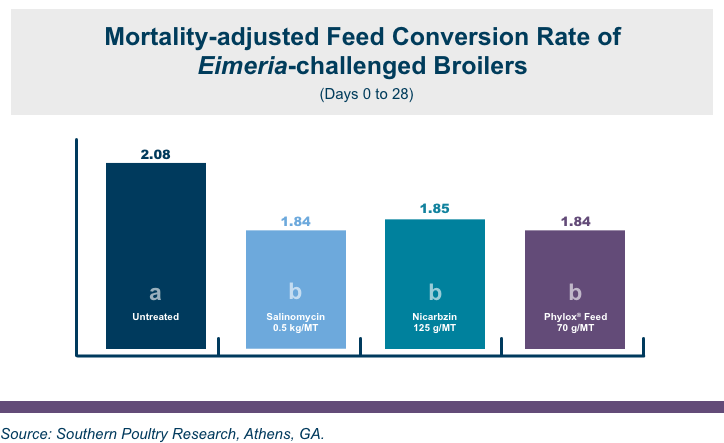
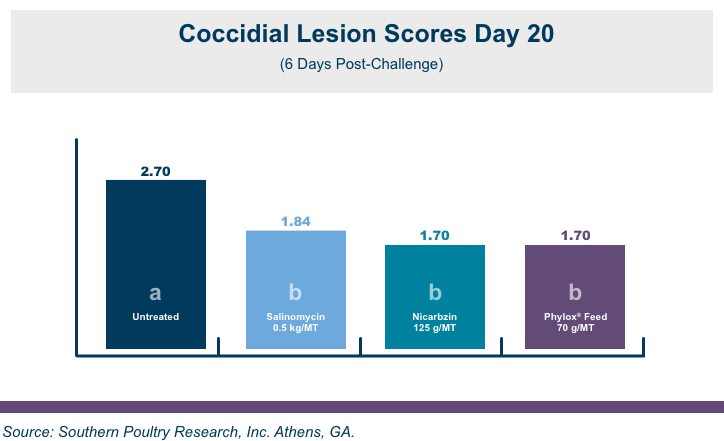
In multiple third-party trials, including in broilers raised in floor pens, Eimeria-challenged broilers fed Phylox had equivalent or numerically improved performance compared to broilers administered industry-standard anticoccidials. This included vaccination, a bio-shuttle program, as well as when anticoccidial chemicals and ionophores were tested.
Southern Poultry Research (Athens, GA) compared the relative efficacy of Phylox with a chemical coccidiostat (nicarbazin) and an ionophore (salinomycin) in broilers challenged with Eimeria species. Phylox showed equivalent feed conversion and coccidia lesion scores compared to the commercially available coccidiostats.
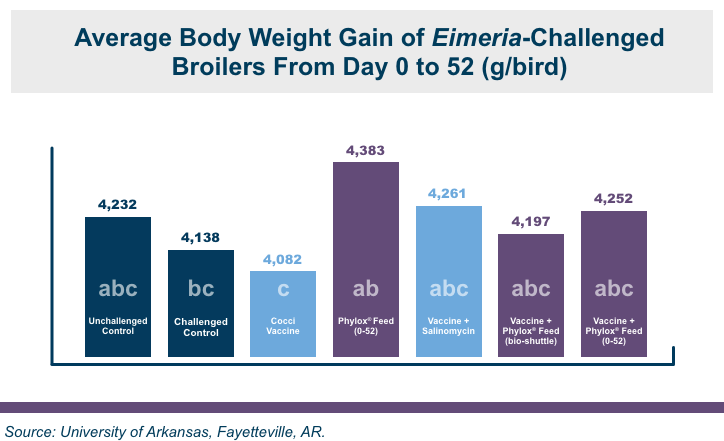
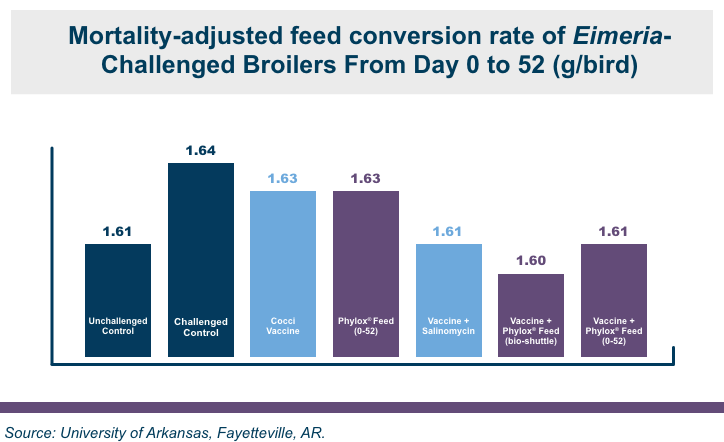
Similarly, in a study at the University of Arkansas, broilers raised in floor pens and fed Phylox had improved key performance indicators compared to the challenged control. Phylox also showed a numeric performance improvement in body weight compared to all tested industry anticoccidial standards, including vaccination and bio-shuttle with salinomycin, and statistically heavier body weight when compared to the treatment receiving an anticoccidial vaccine alone.
Additionally, Phylox did not interfere with vaccine efficacy when fed concomitantly, as Phylox provided equivalent results for all measured variables when it replaced salinomycin in a bio-shuttle program for broilers. The performance of Phylox when fed on top of vaccination, and also in replacement for Salinomycin in a bio-shuttle program were important findings in this study as they demonstrated that Phylox is effective in preventing coccidial reinfection in poultry either through a reduction in oocyst shedding, or via the degradation of ingested oocysts in the gastrointestinal track before they are able to cause a significant incidence of the disease.
Phylox Feed fills the gaps that are missing from other coccidiosis control methods: it can be used in NAE programs, has no withdrawal requirement, won’t promote the emergence of drug-resistant coccidia and isn’t targeted to only specific Eimeria strains. Phylox can also have value in broiler breeder and/or table egg pullet replacement programs to prevent significant disease breakthroughs during the development of bird natural immunity. For more information on how to incorporate Phylox into your coccidiosis control program, contact info@amlan.com.